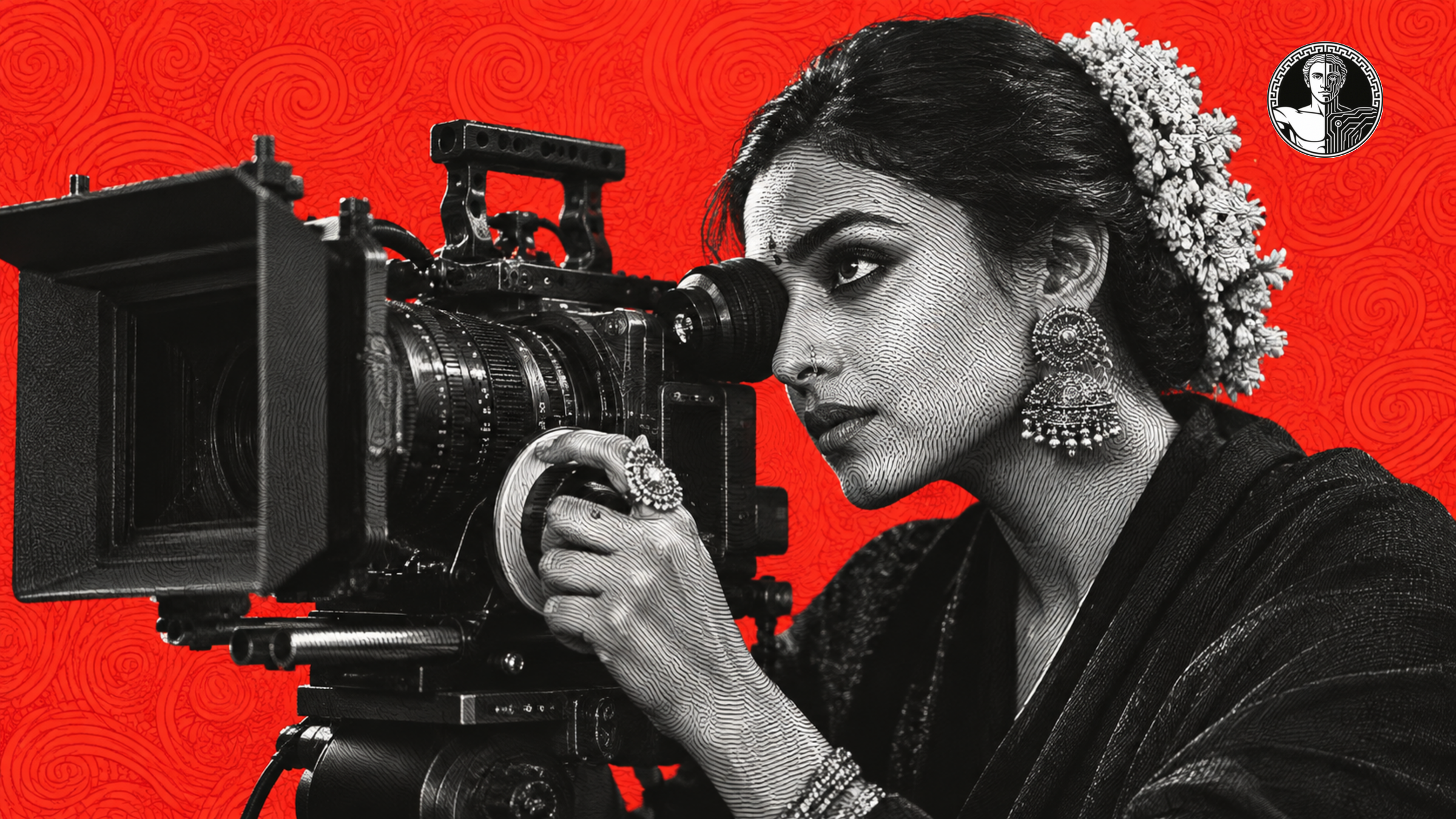
AI FILMMAKING / 10 min read
The Camera Is Becoming a Creative Operating System
AI video is moving beyond isolated clips. The entire production process is becoming more flexible, adaptive and programmable.
THE SHORT ANSWER
AI video production is evolving from isolated clip generation into an integrated creative operating system that connects strategy, story, characters, environments, production, localisation and finishing.
For more than a century, the camera sat at the centre of visual production. A production needed a location, performers, equipment, crew, lighting, transport, post-production and distribution. Every new version of a film or campaign usually meant another production cycle.
That model is changing. AI is not simply replacing the camera. It is expanding what a production system can do around it.
Early AI-video workflows were fragmented: generate an image in one tool, animate it somewhere else, create the voice on another platform, edit everything manually and try to maintain continuity between shots. The industry is now moving toward more integrated production environments, where generation, sound, effects and multiple models can work closer to the edit itself.
The production process is becoming less linear. A scene can be adapted. A product can be placed in another market. A character can speak another language. A campaign can be extended into multiple visual worlds without rebuilding everything from the beginning.
The useful question is not whether the technology can produce this output. It is whether the output makes a decision easier for the audience. That distinction changes the brief, the review process and the measure of success. In the context of the camera is becoming a creative operating system, that means the team must connect AI video production to a specific audience need, a measurable communication job and a clear next action. It also means documenting what must remain stable and what can change between versions, markets, channels and episodes. The discipline is what keeps the work recognisable while the possibilities expand. AI video production is evolving from isolated clip generation into an integrated creative operating system that connects strategy, story, characters, environments, production, localisation and finishing.
AIDEATORS treats the creative asset as part of a larger operating system. The story, visual language, production rules, distribution format and learning loop should reinforce one another instead of becoming disconnected deliverables. In the context of the camera is becoming a creative operating system, that means the team must connect AI filmmaking to a specific audience need, a measurable communication job and a clear next action. It also means documenting what must remain stable and what can change between versions, markets, channels and episodes. The discipline is what keeps the work recognisable while the possibilities expand. AI video production is evolving from isolated clip generation into an integrated creative operating system that connects strategy, story, characters, environments, production, localisation and finishing.
This is where human judgement remains non-negotiable. Someone still has to recognise the tension, choose the point of view, protect cultural context, reject weak iterations and decide what deserves to reach an audience. In the context of the camera is becoming a creative operating system, that means the team must connect AI VFX to a specific audience need, a measurable communication job and a clear next action. It also means documenting what must remain stable and what can change between versions, markets, channels and episodes. The discipline is what keeps the work recognisable while the possibilities expand. AI video production is evolving from isolated clip generation into an integrated creative operating system that connects strategy, story, characters, environments, production, localisation and finishing.
The commercial implication is repeatability. A single impressive output may win attention once; a documented system can create useful variations, learn from response and reduce the cost of restarting the creative process. In the context of the camera is becoming a creative operating system, that means the team must connect virtual production to a specific audience need, a measurable communication job and a clear next action. It also means documenting what must remain stable and what can change between versions, markets, channels and episodes. The discipline is what keeps the work recognisable while the possibilities expand. AI video production is evolving from isolated clip generation into an integrated creative operating system that connects strategy, story, characters, environments, production, localisation and finishing.
The production decision should begin with the audience promise. Once that promise is clear, the team can decide what must be physically true, what can be designed, what should be personalised and where technology creates genuine leverage. In the context of the camera is becoming a creative operating system, that means the team must connect digital humans to a specific audience need, a measurable communication job and a clear next action. It also means documenting what must remain stable and what can change between versions, markets, channels and episodes. The discipline is what keeps the work recognisable while the possibilities expand. AI video production is evolving from isolated clip generation into an integrated creative operating system that connects strategy, story, characters, environments, production, localisation and finishing.
A strong approval process is part of the creative work. It checks identity, continuity, product truth, claims, cultural fit, sound, pacing, accessibility and the final context in which the audience will encounter the work. In the context of the camera is becoming a creative operating system, that means the team must connect AI content systems to a specific audience need, a measurable communication job and a clear next action. It also means documenting what must remain stable and what can change between versions, markets, channels and episodes. The discipline is what keeps the work recognisable while the possibilities expand. AI video production is evolving from isolated clip generation into an integrated creative operating system that connects strategy, story, characters, environments, production, localisation and finishing.
The risk is not that technology changes too quickly. The larger risk is building a fragile workflow around one tool, one operator or one visual trick. Durable value lives in the insight, the system and the owned creative language. In the context of the camera is becoming a creative operating system, that means the team must connect AI video production to a specific audience need, a measurable communication job and a clear next action. It also means documenting what must remain stable and what can change between versions, markets, channels and episodes. The discipline is what keeps the work recognisable while the possibilities expand. AI video production is evolving from isolated clip generation into an integrated creative operating system that connects strategy, story, characters, environments, production, localisation and finishing.
For an ambitious brand, this creates a more useful definition of scale. Scale is not the number of files produced. Scale is the number of meaningful situations the brand can enter without losing recognition, trust or intent. In the context of the camera is becoming a creative operating system, that means the team must connect AI filmmaking to a specific audience need, a measurable communication job and a clear next action. It also means documenting what must remain stable and what can change between versions, markets, channels and episodes. The discipline is what keeps the work recognisable while the possibilities expand. AI video production is evolving from isolated clip generation into an integrated creative operating system that connects strategy, story, characters, environments, production, localisation and finishing.
The useful question is not whether the technology can produce this output. It is whether the output makes a decision easier for the audience. That distinction changes the brief, the review process and the measure of success. In the context of the camera is becoming a creative operating system, that means the team must connect AI VFX to a specific audience need, a measurable communication job and a clear next action. It also means documenting what must remain stable and what can change between versions, markets, channels and episodes. The discipline is what keeps the work recognisable while the possibilities expand. AI video production is evolving from isolated clip generation into an integrated creative operating system that connects strategy, story, characters, environments, production, localisation and finishing.
AIDEATORS treats the creative asset as part of a larger operating system. The story, visual language, production rules, distribution format and learning loop should reinforce one another instead of becoming disconnected deliverables. In the context of the camera is becoming a creative operating system, that means the team must connect virtual production to a specific audience need, a measurable communication job and a clear next action. It also means documenting what must remain stable and what can change between versions, markets, channels and episodes. The discipline is what keeps the work recognisable while the possibilities expand. AI video production is evolving from isolated clip generation into an integrated creative operating system that connects strategy, story, characters, environments, production, localisation and finishing.
This is where human judgement remains non-negotiable. Someone still has to recognise the tension, choose the point of view, protect cultural context, reject weak iterations and decide what deserves to reach an audience. In the context of the camera is becoming a creative operating system, that means the team must connect digital humans to a specific audience need, a measurable communication job and a clear next action. It also means documenting what must remain stable and what can change between versions, markets, channels and episodes. The discipline is what keeps the work recognisable while the possibilities expand. AI video production is evolving from isolated clip generation into an integrated creative operating system that connects strategy, story, characters, environments, production, localisation and finishing.
The commercial implication is repeatability. A single impressive output may win attention once; a documented system can create useful variations, learn from response and reduce the cost of restarting the creative process. In the context of the camera is becoming a creative operating system, that means the team must connect AI content systems to a specific audience need, a measurable communication job and a clear next action. It also means documenting what must remain stable and what can change between versions, markets, channels and episodes. The discipline is what keeps the work recognisable while the possibilities expand. AI video production is evolving from isolated clip generation into an integrated creative operating system that connects strategy, story, characters, environments, production, localisation and finishing.
The production decision should begin with the audience promise. Once that promise is clear, the team can decide what must be physically true, what can be designed, what should be personalised and where technology creates genuine leverage. In the context of the camera is becoming a creative operating system, that means the team must connect AI video production to a specific audience need, a measurable communication job and a clear next action. It also means documenting what must remain stable and what can change between versions, markets, channels and episodes. The discipline is what keeps the work recognisable while the possibilities expand. AI video production is evolving from isolated clip generation into an integrated creative operating system that connects strategy, story, characters, environments, production, localisation and finishing.
What this unlocks for brands
The most valuable application is not simply producing a video at a lower cost. It is building a repeatable visual world.
A travel company can create a recurring series across destinations without sending a complete crew to every location. A food brand can develop a character-led cooking universe with consistent personalities, settings and visual rules. A fashion company can build a digital model that appears across seasons, markets and campaigns. An OTT platform can test characters, story worlds and episode concepts before committing to a larger production.
The advantage is not unlimited content. It is controlled possibility.
The new production pipeline
The emerging workflow looks more like this: investigate the business and audience; discover the real creative opportunity; develop the story, characters and world; previsualise the production; build the footage, sound, voice and VFX; direct and edit with human judgement; localise for different audiences; then measure, adapt and evolve.
Knowing how to operate an AI video tool is not enough. The difficult work remains human: deciding what deserves to exist, directing emotion and attention, maintaining continuity, making the impossible believable, understanding cultural context and turning content into an asset rather than an output.
AI expands the production surface. It does not remove the need for taste.
Where Digital Humans fit
Digital Humans can become recurring characters in branded series, multilingual presenters, digital brand ambassadors, AI sales representatives, virtual hosts, founder twins, product educators and fictional intellectual property.
The strongest brands will not treat them as disposable avatars. They will build identity systems around personality, voice, wardrobe, memory, behaviour, visual language and a reason for existing. That turns a digital human from a novelty into an owned media asset.
The prediction
The next competitive advantage in video will not belong only to the company with access to the newest model. It will belong to the company that builds a repeatable creative system around those models.
Tools will change quickly. Characters, worlds, production logic and audience understanding will compound over time. The brands that begin building now will have more than a library of videos. They will have a visual language, an intelligent production pipeline and original creative IP.
At AIDEATORS, we treat AI as leverage, not as the product itself. We investigate the business, discover the opportunity, educate the client, architect the right capability and build towards a measurable outcome. Because the future of video is not about making more content. It is about making more possibilities usable.
Key takeaways
- The production system matters more than access to one model.
- Creative continuity, taste and cultural context remain human responsibilities.
- The strongest opportunity is a repeatable visual world, not unlimited disconnected content.
Research desk
Sources used for the current editorial framing. Market interpretation and AIDEATORS recommendations are clearly separated from verified source material.
Adobe — Premiere Pro generative AI features Google — Flow filmmaking tool U.S. Copyright Office — Copyright and Artificial Intelligence WIPO — Generative AI and intellectual property