CREATIVE PRODUCTION / 10 min read
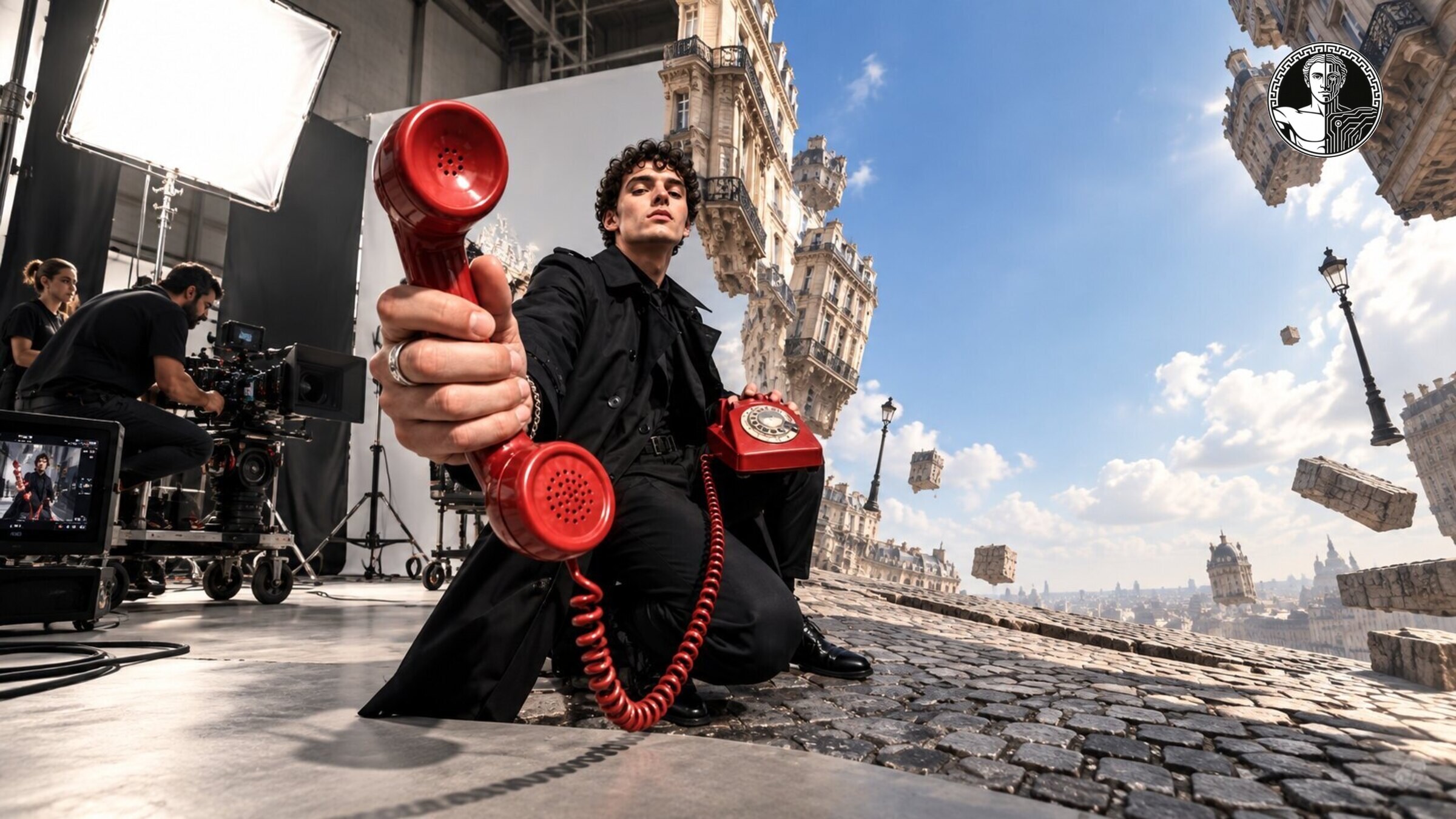
AI production or a physical shoot? Start with the audience promise
The right question is not which method is newer. It is which production model gives the idea the truth, control and scale it actually needs.
THE SHORT ANSWER
Choose a traditional shoot when physical performance, real-world interaction or practical capture is central to the idea. Choose AI-native production when the idea needs controlled impossible worlds, many visual variations, digital talent, rapid localisation or production beyond the limits of one physical setup. Hybrid production is often the strongest answer.
A physical shoot and AI-native production are not opposing belief systems. They are different production models, and the useful decision begins with the audience promise rather than the production label.
The useful question is not whether the technology can produce this output. It is whether the output makes a decision easier for the audience. That distinction changes the brief, the review process and the measure of success. In the context of ai production or a physical shoot? start with the audience promise, that means the team must connect AI commercial production vs traditional shoot to a specific audience need, a measurable communication job and a clear next action. It also means documenting what must remain stable and what can change between versions, markets, channels and episodes. The discipline is what keeps the work recognisable while the possibilities expand. Choose a traditional shoot when physical performance, real-world interaction or practical capture is central to the idea. Choose AI-native production when the idea needs controlled impossible worlds, many visual variations, digital talent, rapid localisation or production beyond the limits of one physical setup. Hybrid production is often the strongest answer.
AIDEATORS treats the creative asset as part of a larger operating system. The story, visual language, production rules, distribution format and learning loop should reinforce one another instead of becoming disconnected deliverables. In the context of ai production or a physical shoot? start with the audience promise, that means the team must connect AI production for brands to a specific audience need, a measurable communication job and a clear next action. It also means documenting what must remain stable and what can change between versions, markets, channels and episodes. The discipline is what keeps the work recognisable while the possibilities expand. Choose a traditional shoot when physical performance, real-world interaction or practical capture is central to the idea. Choose AI-native production when the idea needs controlled impossible worlds, many visual variations, digital talent, rapid localisation or production beyond the limits of one physical setup. Hybrid production is often the strongest answer.
This is where human judgement remains non-negotiable. Someone still has to recognise the tension, choose the point of view, protect cultural context, reject weak iterations and decide what deserves to reach an audience. In the context of ai production or a physical shoot? start with the audience promise, that means the team must connect creative production workflow to a specific audience need, a measurable communication job and a clear next action. It also means documenting what must remain stable and what can change between versions, markets, channels and episodes. The discipline is what keeps the work recognisable while the possibilities expand. Choose a traditional shoot when physical performance, real-world interaction or practical capture is central to the idea. Choose AI-native production when the idea needs controlled impossible worlds, many visual variations, digital talent, rapid localisation or production beyond the limits of one physical setup. Hybrid production is often the strongest answer.
The commercial implication is repeatability. A single impressive output may win attention once; a documented system can create useful variations, learn from response and reduce the cost of restarting the creative process. In the context of ai production or a physical shoot? start with the audience promise, that means the team must connect AI commercial production vs traditional shoot to a specific audience need, a measurable communication job and a clear next action. It also means documenting what must remain stable and what can change between versions, markets, channels and episodes. The discipline is what keeps the work recognisable while the possibilities expand. Choose a traditional shoot when physical performance, real-world interaction or practical capture is central to the idea. Choose AI-native production when the idea needs controlled impossible worlds, many visual variations, digital talent, rapid localisation or production beyond the limits of one physical setup. Hybrid production is often the strongest answer.
The production decision should begin with the audience promise. Once that promise is clear, the team can decide what must be physically true, what can be designed, what should be personalised and where technology creates genuine leverage. In the context of ai production or a physical shoot? start with the audience promise, that means the team must connect AI production for brands to a specific audience need, a measurable communication job and a clear next action. It also means documenting what must remain stable and what can change between versions, markets, channels and episodes. The discipline is what keeps the work recognisable while the possibilities expand. Choose a traditional shoot when physical performance, real-world interaction or practical capture is central to the idea. Choose AI-native production when the idea needs controlled impossible worlds, many visual variations, digital talent, rapid localisation or production beyond the limits of one physical setup. Hybrid production is often the strongest answer.
A strong approval process is part of the creative work. It checks identity, continuity, product truth, claims, cultural fit, sound, pacing, accessibility and the final context in which the audience will encounter the work. In the context of ai production or a physical shoot? start with the audience promise, that means the team must connect creative production workflow to a specific audience need, a measurable communication job and a clear next action. It also means documenting what must remain stable and what can change between versions, markets, channels and episodes. The discipline is what keeps the work recognisable while the possibilities expand. Choose a traditional shoot when physical performance, real-world interaction or practical capture is central to the idea. Choose AI-native production when the idea needs controlled impossible worlds, many visual variations, digital talent, rapid localisation or production beyond the limits of one physical setup. Hybrid production is often the strongest answer.
The risk is not that technology changes too quickly. The larger risk is building a fragile workflow around one tool, one operator or one visual trick. Durable value lives in the insight, the system and the owned creative language. In the context of ai production or a physical shoot? start with the audience promise, that means the team must connect AI commercial production vs traditional shoot to a specific audience need, a measurable communication job and a clear next action. It also means documenting what must remain stable and what can change between versions, markets, channels and episodes. The discipline is what keeps the work recognisable while the possibilities expand. Choose a traditional shoot when physical performance, real-world interaction or practical capture is central to the idea. Choose AI-native production when the idea needs controlled impossible worlds, many visual variations, digital talent, rapid localisation or production beyond the limits of one physical setup. Hybrid production is often the strongest answer.
For an ambitious brand, this creates a more useful definition of scale. Scale is not the number of files produced. Scale is the number of meaningful situations the brand can enter without losing recognition, trust or intent. In the context of ai production or a physical shoot? start with the audience promise, that means the team must connect AI production for brands to a specific audience need, a measurable communication job and a clear next action. It also means documenting what must remain stable and what can change between versions, markets, channels and episodes. The discipline is what keeps the work recognisable while the possibilities expand. Choose a traditional shoot when physical performance, real-world interaction or practical capture is central to the idea. Choose AI-native production when the idea needs controlled impossible worlds, many visual variations, digital talent, rapid localisation or production beyond the limits of one physical setup. Hybrid production is often the strongest answer.
The useful question is not whether the technology can produce this output. It is whether the output makes a decision easier for the audience. That distinction changes the brief, the review process and the measure of success. In the context of ai production or a physical shoot? start with the audience promise, that means the team must connect creative production workflow to a specific audience need, a measurable communication job and a clear next action. It also means documenting what must remain stable and what can change between versions, markets, channels and episodes. The discipline is what keeps the work recognisable while the possibilities expand. Choose a traditional shoot when physical performance, real-world interaction or practical capture is central to the idea. Choose AI-native production when the idea needs controlled impossible worlds, many visual variations, digital talent, rapid localisation or production beyond the limits of one physical setup. Hybrid production is often the strongest answer.
AIDEATORS treats the creative asset as part of a larger operating system. The story, visual language, production rules, distribution format and learning loop should reinforce one another instead of becoming disconnected deliverables. In the context of ai production or a physical shoot? start with the audience promise, that means the team must connect AI commercial production vs traditional shoot to a specific audience need, a measurable communication job and a clear next action. It also means documenting what must remain stable and what can change between versions, markets, channels and episodes. The discipline is what keeps the work recognisable while the possibilities expand. Choose a traditional shoot when physical performance, real-world interaction or practical capture is central to the idea. Choose AI-native production when the idea needs controlled impossible worlds, many visual variations, digital talent, rapid localisation or production beyond the limits of one physical setup. Hybrid production is often the strongest answer.
This is where human judgement remains non-negotiable. Someone still has to recognise the tension, choose the point of view, protect cultural context, reject weak iterations and decide what deserves to reach an audience. In the context of ai production or a physical shoot? start with the audience promise, that means the team must connect AI production for brands to a specific audience need, a measurable communication job and a clear next action. It also means documenting what must remain stable and what can change between versions, markets, channels and episodes. The discipline is what keeps the work recognisable while the possibilities expand. Choose a traditional shoot when physical performance, real-world interaction or practical capture is central to the idea. Choose AI-native production when the idea needs controlled impossible worlds, many visual variations, digital talent, rapid localisation or production beyond the limits of one physical setup. Hybrid production is often the strongest answer.
The commercial implication is repeatability. A single impressive output may win attention once; a documented system can create useful variations, learn from response and reduce the cost of restarting the creative process. In the context of ai production or a physical shoot? start with the audience promise, that means the team must connect creative production workflow to a specific audience need, a measurable communication job and a clear next action. It also means documenting what must remain stable and what can change between versions, markets, channels and episodes. The discipline is what keeps the work recognisable while the possibilities expand. Choose a traditional shoot when physical performance, real-world interaction or practical capture is central to the idea. Choose AI-native production when the idea needs controlled impossible worlds, many visual variations, digital talent, rapid localisation or production beyond the limits of one physical setup. Hybrid production is often the strongest answer.
The production decision should begin with the audience promise. Once that promise is clear, the team can decide what must be physically true, what can be designed, what should be personalised and where technology creates genuine leverage. In the context of ai production or a physical shoot? start with the audience promise, that means the team must connect AI commercial production vs traditional shoot to a specific audience need, a measurable communication job and a clear next action. It also means documenting what must remain stable and what can change between versions, markets, channels and episodes. The discipline is what keeps the work recognisable while the possibilities expand. Choose a traditional shoot when physical performance, real-world interaction or practical capture is central to the idea. Choose AI-native production when the idea needs controlled impossible worlds, many visual variations, digital talent, rapid localisation or production beyond the limits of one physical setup. Hybrid production is often the strongest answer.
Where a physical shoot is strongest
A traditional production can be the right choice when the truth of the work depends on a real person, real product interaction, physical texture or a location that must be documented. It can also be the right choice when the performance is the central creative asset and the production team already has the best way to capture it.
Where AI-native production is strongest
AI-native production can expand the number of locations, characters, worlds and visual iterations available to a team. It is particularly useful when the brief needs a designed reality, a recurring digital identity, multiple language or format versions, or a story that would be impractical to stage physically.
The decision framework
Start with the audience promise, not the production label. Map the moments that need physical truth, the moments that need designed possibility and the moments that need scale. Then build the production around the strongest method for each moment.
Key takeaways
- Choose the production method after defining the audience promise.
- Hybrid production can protect physical truth while expanding creative possibility.
- The standard is the finished communication, not the novelty of the tool.
Research desk
Sources used for the current editorial framing. Market interpretation and AIDEATORS recommendations are clearly separated from verified source material.
Adobe — Premiere Pro generative AI features Google — Flow filmmaking tool U.S. Copyright Office — Copyright and Artificial Intelligence WIPO — Generative AI and intellectual property